
ADU Rental Income Around Sacramento: What a Backyard Unit Actually Collects

ADU Builder editorial – Sacramento, CA
A backyard ADU around Sacramento typically rents in these ballpark bands: roughly $1,400-$1,900 a month at about 400 square feet, $1,700-$2,300 at about 600, $2,000-$2,700 at about 800, and $2,400-$3,200 at about 1,200 square feet. Those are planning ranges, not promises – your street and your finish level move the number, so verify against live local listings before you build anything. Set that against a ballpark build cost of roughly $150,000-$240,000 for a 600 square foot detached unit and you can run the payback math on a napkin tonight. Some lots pencil beautifully. Some don’t. This article walks through what actually drives ADU rental income around the Sacramento region and how to check the math before you spend a dollar on construction. We build these units for a living, and we would rather tell you “don’t” than sell you a unit that never pays.
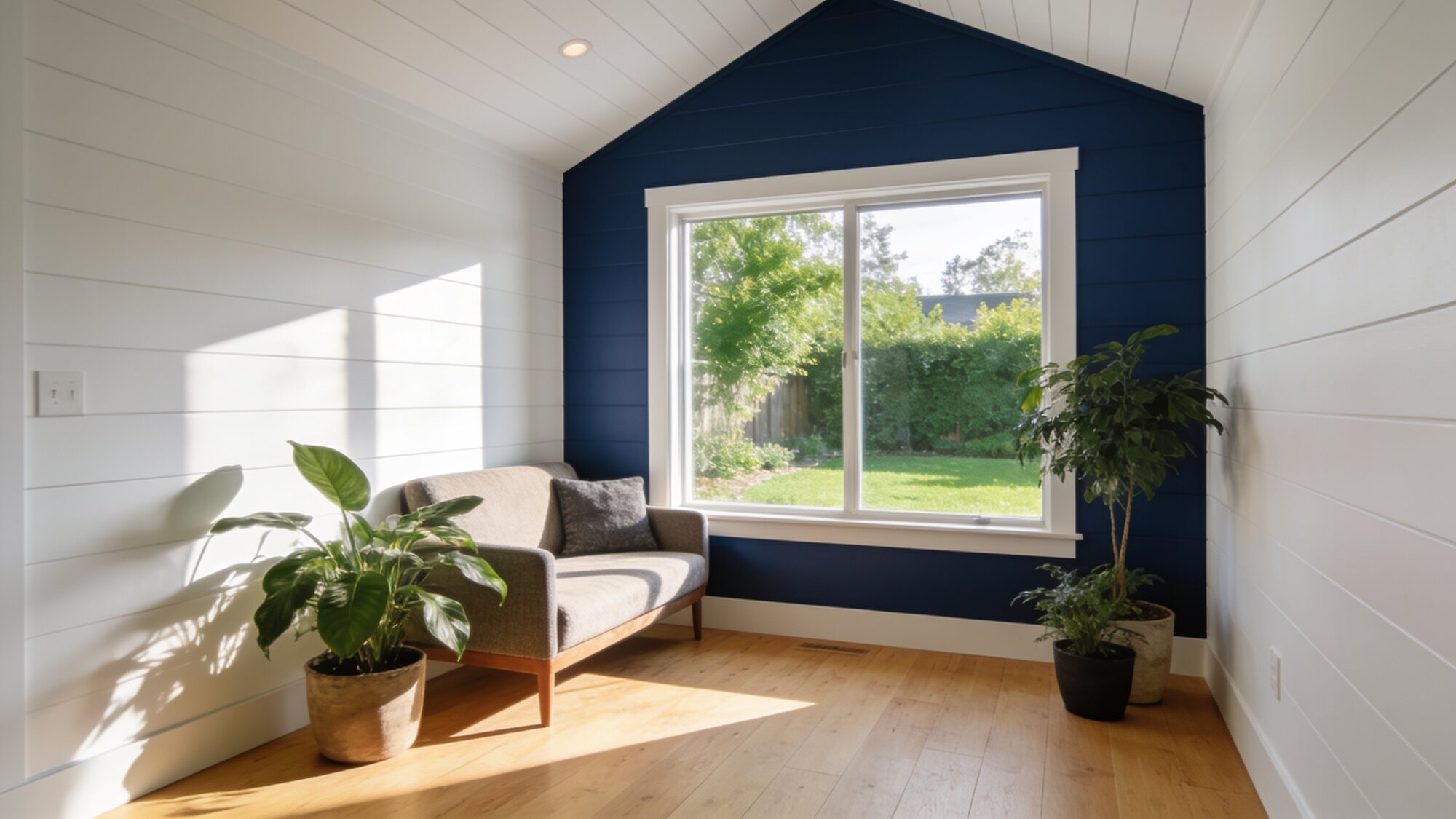 Concept rendering – illustrative, not a completed project.
What does a backyard unit actually collect around Sacramento?
Here are the ballpark bands we use in planning conversations across the Sacramento region. Read them for what they are: planning ranges, not appraisals. Rents shift block by block, and the only number that matters is what units like yours are listing for this month.
| Unit size | Ballpark monthly rent | Ballpark detached build cost* |
|---|---|---|
| ~400 sq ft | $1,400-$1,900 | $100,000-$160,000 |
| ~600 sq ft | $1,700-$2,300 | $150,000-$240,000 |
| ~800 sq ft | $2,000-$2,700 | $200,000-$320,000 |
| ~1,200 sq ft | $2,400-$3,200 | $300,000-$480,000 |
*Planning ranges at roughly $250-$400 per square foot for detached construction. Site conditions move these numbers, sometimes by a lot. None of this is a quote.
One thing jumps off that table if you stare at it long enough. The 1,200 square foot unit costs roughly double what the 600 costs to build, but it does not collect double the rent. Small units earn more per square foot. Bigger is not automatically better business.
And verify against live listings. Open the rental sites tonight and filter to your area and unit size. Ten minutes of looking beats any table anyone shows you, including ours.
How much do you have to spend to collect that rent?
There are three ways in, and the price tags are nothing alike.
A detached ADU runs roughly $250-$400 per square foot. It is the most expensive path and usually the strongest rental, because a standalone unit with its own entrance and no shared walls is what tenants actually want to pay for. Typical builds run 400 to 1,200 square feet.
A garage conversion runs roughly $150-$260 per square foot. Cheaper for one honest reason: the slab, the walls, and the roof are already built and paid for. You are finishing a structure, not creating one.
A Junior ADU runs roughly $100-$200 per square foot. It is carved out of your existing home and capped at 500 square feet by state law. Lowest cost of entry, lowest rent ceiling. Here is a wrinkle worth knowing, though: many lots may have both a JADU and a detached ADU. Two units. Two rent checks. One property.
Now the part most homeowners get backwards. Square footage is not what drives your final price. Utility trench length, slope, septic capacity, an electrical panel that needs upgrading, and the finish level you pick move the number more than the size of the box does. Two identical floor plans on two different lots can land tens of thousands of dollars apart. That is why every range on this page is labeled a ballpark, and why the cost and financing picture only gets real after someone walks your lot.
Does the 2 a.m. math actually pencil?
You have probably already run a version of this in your head at 2 a.m. Let’s do it on paper instead.
Take a 600 square foot detached unit. Ballpark build: $150,000-$240,000. Ballpark rent: $1,700-$2,300 a month, which is $20,400-$27,600 a year gross.
Best case – a build near the bottom of the cost range, rented near the top of the band – gross rent covers the build in something under six years. Worst case – expensive site, soft rent – you are closer to twelve. Both outcomes come from the same table. That spread is the whole decision.
And gross is not net. Tenants move out and water heaters die. Insurance and property taxes never take a year off. Whatever payback you calculate from gross rent, the real number is longer.
So here is the rule we use: run the math with the bottom of the rent band and the top of the cost range. If the project still makes sense at those numbers, you have a real project. If it only works when every number breaks your way, it does not work. We would rather tell you that at your kitchen table than have you learn it two years into a build.
What moves the rent number up or down?
Within those bands, a few things separate the units that collect top-of-band rent from the ones that sit vacant at a hopeful price.
Location does part of it, same as any rental. Close-in neighborhoods and commute-friendly pockets carry a premium; the far edges of the region sit lower in the band. You cannot move your lot, so price for the street you have.
Layout does more than most people think. A well-planned 600 square foot unit with a real bedroom door and a full kitchen can out-collect a clumsy 800 square foot unit that feels like converted storage. You are renting a home, not a floor area.
Finish level is where owners burn money. Tenants pay for clean and private. They do not pay you back for imported tile. Durable mid-grade finishes collect nearly the same rent as luxury ones and survive tenants far better.
Privacy is the quiet one. A unit with its own entrance and a bit of separated yard rents faster and turns over less than one where the tenant crosses your patio to reach the front door. Solve that on paper, before the walls are drawn.
What does California law already let you do?
The legal ground here is better than most homeowners think, and it is worth knowing before somebody at a barbecue tells you otherwise.
Under California state law, ADUs are allowed on single-family lots statewide, and local agencies cannot ban them. A compliant application gets ministerial review – a non-discretionary, check-the-boxes approval with no public hearing and no neighbor veto. Agencies also face statutory timelines to act on your application. The state lays out the rules at the California Department of Housing and Community Development.
A few specifics matter for rental math. Owner-occupancy cannot be required for standard ADUs under current law, which means you are not legally chained to the property to collect the rent. HOAs cannot flatly prohibit ADUs. And in many garage-conversion cases, the parking you lose does not have to be replaced.
None of that means the process is instant. Permits and design come before construction, and how fast your paperwork moves depends on your jurisdiction’s workload. Plan for that up front – our permits and zoning guide walks through the sequence.
How do you protect your ADU rental income before you build?
Most ADU rental disappointments are self-inflicted, and nearly all of them happen before construction starts. The checklist:
- Verify rent against live listings for your area and unit size – this month’s listings, not a figure you remember from last year.
- Get the site priced before you fall for a floor plan. Trench length and panel capacity have wrecked more budgets than any countertop upgrade ever will.
- Permit everything. An unpermitted unit collects rent right up until it wrecks your resale, and then it costs more than it ever earned.
- Size to the market, not to the maximum your lot allows. The extra square footage costs full price and rents at a discount.
- Budget with the bottom of the rent band and the top of the cost range. If the project survives that test, build it.
That last one is the whole article in a single line. Pessimistic math produces happy landlords.
What should you do before you spend a dollar?
Get a real number for your actual lot. Everything on this page is a planning range, and we have said so at every turn because it is true. The trench, the panel, the slope, the setbacks – your lot decides the cost side of the equation, and no article can see your backyard.
ADU Builder is a Sacramento-based design-build contractor working within roughly 200 miles of the city – see our service areas. We walk the lot with you and hand you a written estimate on the spot. It is free, with no obligation. And if the math on your lot does not pencil, we will say so.
Request a free ADU quote or call (916) 432-0333. Bring your 2 a.m. numbers. We will tell you which ones are real.
Straight answers on ADU rental income
How much rental income does an ADU collect around Sacramento?
Ballpark planning bands: roughly $1,400-$1,900 a month at about 400 square feet, $1,700-$2,300 at about 600, $2,000-$2,700 at about 800, and $2,400-$3,200 at about 1,200 square feet. Verify against live local listings before you build – rents shift block by block.
How long does it take an ADU to pay for itself?
Napkin math on a 600 square foot detached unit: a ballpark build of $150,000-$240,000 against $20,400-$27,600 a year in gross rent lands somewhere between roughly six and twelve years before expenses. That is gross, not net – vacancies, repairs, insurance, and taxes stretch it. Run your numbers with the bottom of the rent band and the top of the cost range.
Do I have to live on the property to rent out my ADU?
No. Under current California law, owner-occupancy cannot be required for standard ADUs. Junior ADUs play by different rules, so ask about your specific setup before choosing that path.
Can my HOA stop me from building an ADU?
California law says HOAs cannot flatly prohibit ADUs. Local agencies cannot ban them either, and a compliant application gets ministerial review with no public hearing.
What is the cheapest way to add a rental unit?
A Junior ADU, at roughly $100-$200 per square foot, capped at 500 square feet inside your existing home. A garage conversion runs roughly $150-$260 per square foot because the structure already exists. Both cost less than detached construction at roughly $250-$400 per square foot.
Can I rent out two units on one lot?
Often, yes. Under California law, many single-family lots may have both a Junior ADU and a detached ADU – two rent checks from one property. Whether your lot qualifies depends on its specifics, which is exactly what a site visit answers.
Get real numbers for your lot
Ballparks are for reading. Your number comes from your lot – and the site visit is free.
Free ADU Estimate
Tell us about your lot and we will call you with real numbers.