
California ADU Laws, Explained in Plain English: What Cities Can No Longer Stop

ADU Builder editorial – Sacramento, CA
California law has stripped cities of most of their power to stop ADUs. If you own a single-family lot anywhere in the state, you can build an accessory dwelling unit, and your city cannot ban it. A compliant application gets ministerial review – staff checks it against a checklist, with no public hearing and no neighbor vote. Cities cannot require you to live on the property for a standard ADU under current law. Your HOA cannot flatly prohibit one either. Convert your garage, and in many cases the city cannot make you replace the parking. You can also add a Junior ADU of up to 500 square feet inside your existing home, and many lots can hold both a JADU and a full ADU. Agencies even face statutory clocks on review. This article walks through each protection in plain English, plus what building one actually costs.
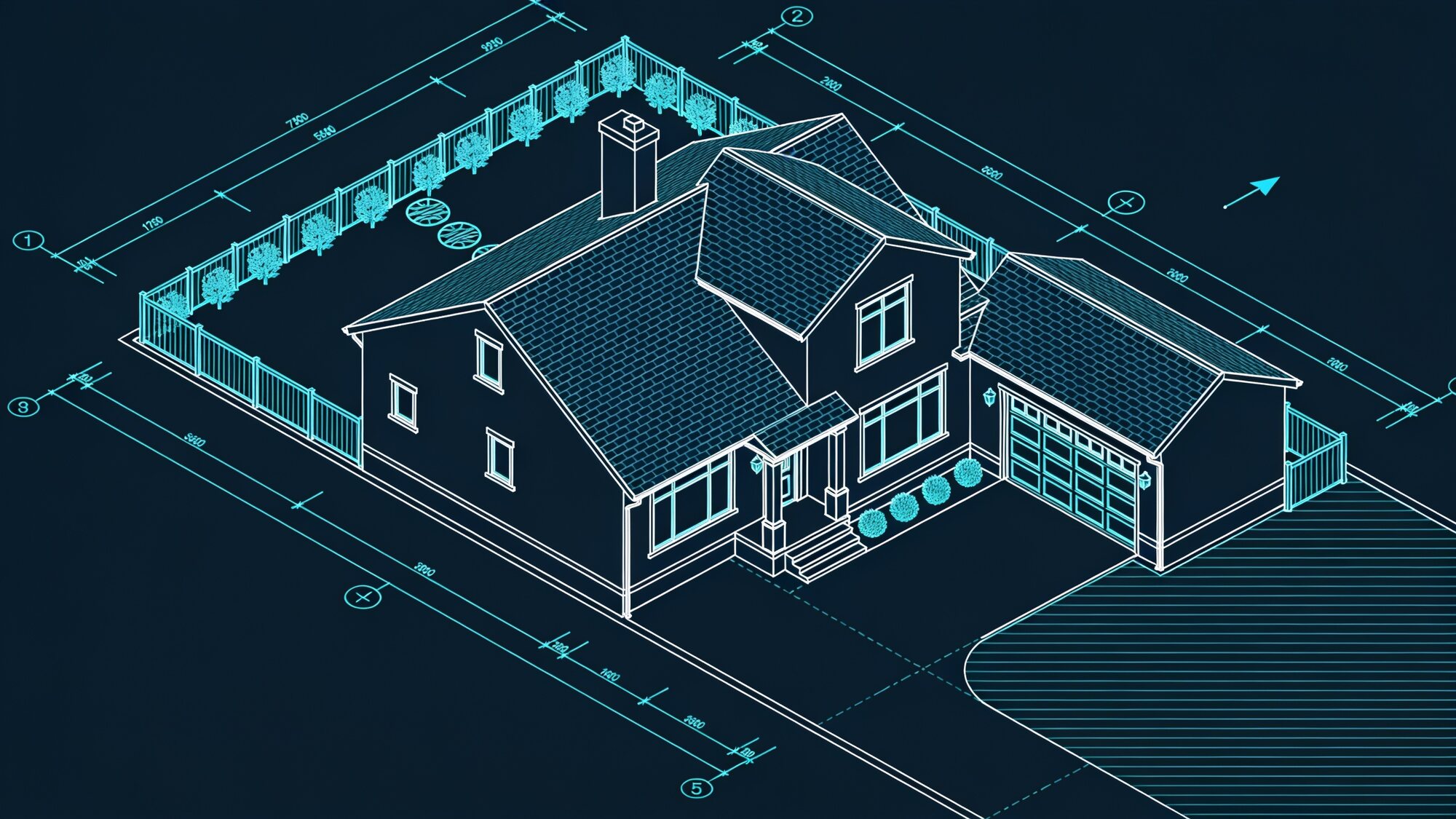 Concept rendering – illustrative, not a completed project.
Why Did the State Take This Power Away From Cities?
Because cities were using it. For years, a homeowner who wanted a modest second unit on land they already owned could be stalled by hearing schedules and by neighbors with strong opinions about someone else’s backyard. Projects died of old age long before anyone officially said no.
So the state legislature changed the game. A series of state ADU laws pulled the blocking power away from local government and handed it back to you, the property owner. Cities still administer the process. They no longer control the outcome.
The result reads simply: if you own a single-family lot in California, an ADU is allowed on it. Your city can shape the details through objective standards. It cannot say no to the category. The state’s housing department keeps the source material in one place – the HCD accessory dwelling unit page – and everything below is grounded in it.
What Exactly Can Your City No Longer Do?
Here is the short list. Every item on it is state law, not our opinion.
- Ban your ADU. ADUs are allowed on single-family lots statewide. A local agency cannot prohibit them.
- Put your project through a public hearing. A compliant application gets ministerial review – a non-discretionary, staff-level check. No hearing, no neighbor veto.
- Force you to live on the property. Owner-occupancy cannot be required for standard ADUs under current law.
- Demand replacement parking in many garage conversions. Parking replacement is limited in many garage-conversion cases.
- Hide behind your HOA. Homeowners associations cannot flatly prohibit ADUs either.
- Sit on your file indefinitely. Agencies face statutory review timelines on ADU applications.
Read that list twice. That is a lot of leverage sitting in your hands, and most homeowners have no idea they hold it.
What Does “Ministerial Review” Mean in Plain English?
Ministerial means checklist. Discretionary means opinion.
Under discretionary review, a planning body could look at a fully code-compliant project and reject it anyway, because somebody influential did not care for it. Ministerial review deletes the opinion step. If your plans meet the objective standards, the approval follows. Nobody stands at a microphone to complain about your roofline, because there is no microphone.
Two honest caveats. First, “compliant application” is doing heavy lifting in that sentence. Sloppy plans trigger correction cycles, and correction cycles eat months. Second, the law sets review clocks, but a buried permit counter still moves slower than an empty one. Timelines vary with jurisdiction workload, and anyone who promises you an exact approval date is guessing.
This is where design-build earns its keep. We prepare and walk in the paperwork ourselves – see how we handle ADU permits and zoning – because a checklist you satisfy on the first pass is the fastest checklist there is.
Do You Have to Live on the Property?
No. Owner-occupancy cannot be required for standard ADUs under current law.
Sit with that for a second, because it kills one of the oldest fears in this game: that building an ADU legally chains you to the address. It does not. The unit can be a straight rental play on a property you own but do not live in.
One caution, and we mean it: “under current law” is a load-bearing phrase. Legislatures amend things. Confirm the rule still stands when you actually pull permits, not when you read a blog post. Even ours.
What About Your Garage?
The garage conversion is the budget play, and the state protected it on purpose. In many garage-conversion cases, the city’s power to demand replacement parking is limited. Turning the garage into a rental does not automatically obligate you to build new covered parking somewhere else on the lot.
Why does the garage pencil so well? Because the expensive parts already exist. The slab is poured. The walls stand. The roof already sheds water. You are finishing a shell instead of building one, which is why a garage conversion ADU runs roughly $150-260 per square foot as a ballpark planning range, against roughly $250-400 per square foot for detached new construction. Site conditions move both numbers. Treat them as planning figures, never as quotes.
What Is a JADU, and Can You Have Both?
A Junior ADU is a small unit, capped at 500 square feet, created inside the walls of your existing home. Picture a bedroom wing with its own entrance, reworked into a compact living space. Because you are mostly converting space you already own, a JADU is the cheapest ticket in the building: roughly $100-200 per square foot, ballpark.
Now the part most homeowners have never been told: many lots may have both a JADU and a full ADU. A junior unit inside the house you already own, plus a detached unit out in the yard. One property, two rentable doors beyond your own. That is the ceiling state law opened up, and almost nobody on your street knows it exists.
Can Your HOA Stop You?
Not with a flat no. HOAs cannot outright prohibit ADUs under state law.
Will your board be thrilled? Maybe not. You may still face architectural paperwork and some back-and-forth. But there is a hard difference between a process and a veto, and the veto is gone. If a board member tells you “we don’t allow ADUs here,” they are reciting a rule the state already overrode.
Does This Apply in Your City Specifically?
Yes. That is the point of a statewide law. Sacramento, Roseville, Elk Grove, Citrus Heights, the small towns between them – the floor is the same everywhere. ADUs are allowed on single-family lots, and a compliant application gets ministerial review on a statutory clock.
What differs from city to city is texture: how busy the permit counter is and how the local objective standards read. Timelines vary with jurisdiction workload more than with anything else. That is not a reason to wait. It is a reason to submit a clean application the first time.
Where Do Cities Still Have a Say?
We would rather tell you a hard truth than sell you a fantasy: the city is still in your project, and you should want it there.
Building codes still apply, and they exist so your tenant’s furnace never becomes a news story. Your plans get reviewed and an inspector walks the job. The sequence has not changed either: design and permits come before construction. Anyone who starts digging before the permit set is approved is gambling with your money.
And the worst move on the board is still the unpermitted unit. It saves money right up until it costs you the sale, because unpermitted construction creates real resale problems. If a contractor suggests skipping permits “to keep things simple,” you have just learned everything you need to know about that contractor.
What Do These Rights Actually Cost to Use?
You may already be doing the 2 a.m. math, weighing what it would cost against what it would rent for. Here are honest figures to run it with. These are ballpark planning ranges, not quotes, and site conditions move every one of them.
| ADU type | Ballpark cost per sq ft | Why the number sits there |
|---|---|---|
| Detached ADU | $250-400 | Full new construction: foundation, shell, utilities, everything |
| Garage conversion | $150-260 | Reuses the existing slab, walls, and roof |
| JADU | $100-200 | Up to 500 sq ft converted inside the existing home |
Typical builds run 400 to 1,200 square feet. As a worked example, a 600 square foot detached ADU lands roughly $150,000-$240,000 as a planning range.
Here is what actually moves your number, and it is rarely the square footage: utility trench length, slope, septic capacity, whether your electrical panel needs an upgrade, and the finish level you choose. Two identical floor plans on two different lots can land far apart on price. That is not a contractor excuse. That is dirt and distance doing what they do.
On the income side, Sacramento-region ballpark rent bands look like this: around $1,400-$1,900 a month at roughly 400 square feet, $1,700-$2,300 at 600, $2,000-$2,700 at 800, and $2,400-$3,200 at 1,200. Those are ballparks. Verify them against live local listings before you borrow a dollar.
For the money side in depth – what drives cost, how homeowners fund these builds – start with our ADU cost and financing guide. If you are a step earlier, still deciding whether an ADU belongs on your lot at all, the complete ADU guide covers the road from idea to keys.
And when you are done reading ranges and want a number with your address on it, request a free quote. We come out and walk your lot, checking what a phone quote cannot see, from the trench run to the shape of your electrical panel. Then you get a written estimate. Free and no obligation, in writing where you can hold us to it later. Or skip the form and call (916) 432-0333. We serve roughly 200 miles around Sacramento.
Straight Answers on California ADU Law
Can my city ban an ADU on my single-family lot?
No. California state law allows ADUs on single-family lots statewide, and local agencies cannot prohibit them. A compliant application gets ministerial review, with no public hearing and no neighbor vote.
Do I have to live on the property to have an ADU?
No. Owner-occupancy cannot be required for standard ADUs under current law. Laws do get amended, so confirm the rule still stands when you actually pull permits.
Can my HOA prohibit an ADU?
No. HOAs cannot flatly prohibit ADUs under California law. You may still go through the association’s paperwork, but the flat veto is gone.
Can I build both a JADU and a regular ADU on one lot?
On many lots, yes. A Junior ADU is capped at 500 square feet inside your existing home, and many properties may hold both a JADU and a full ADU.
How much does an ADU cost near Sacramento?
As ballpark planning ranges, not quotes: a detached ADU runs roughly $250-400 per square foot, a garage conversion roughly $150-260, and a JADU roughly $100-200. A 600 square foot detached unit lands roughly $150,000-$240,000. Site conditions move every number, which is why our on-site written estimates are free.
What happens if I build an ADU without permits?
You inherit resale problems when it is time to sell. Permits and design come before construction, and state law already protects a compliant application – use the process, because it is built in your favor.
Get real numbers for your lot
Ballparks are for reading. Your number comes from your lot – and the site visit is free.
Free ADU Estimate
Tell us about your lot and we will call you with real numbers.