
ADU Fees Just Changed in California: The 750 Sq Ft Line Every Sacramento Homeowner Should Know

ADU Builder editorial – Sacramento, CA
Here is the straight answer on ADU impact fees in California. Since January 1, 2026, under SB 543, local agencies may not charge development impact fees on an ADU of 750 square feet or less. An ADU of 500 square feet or less is also exempt from school fees. The 750 line is the one to watch, because a unit that crosses it gets pulled into impact fees as a whole. On September 29, 2026, Governor Newsom signed SB 1117, which, per its sponsor’s description, would charge impact fees on only the square footage above 750 for the first two ADUs on a property. The final text is still pending, so plan around the rule you can read today. Other charges, like plan check and permit fees, still exist and vary by city. That makes 740 to 750 square feet one of the smartest sizes in California right now, and your parcel’s exact fees come with our free estimate.
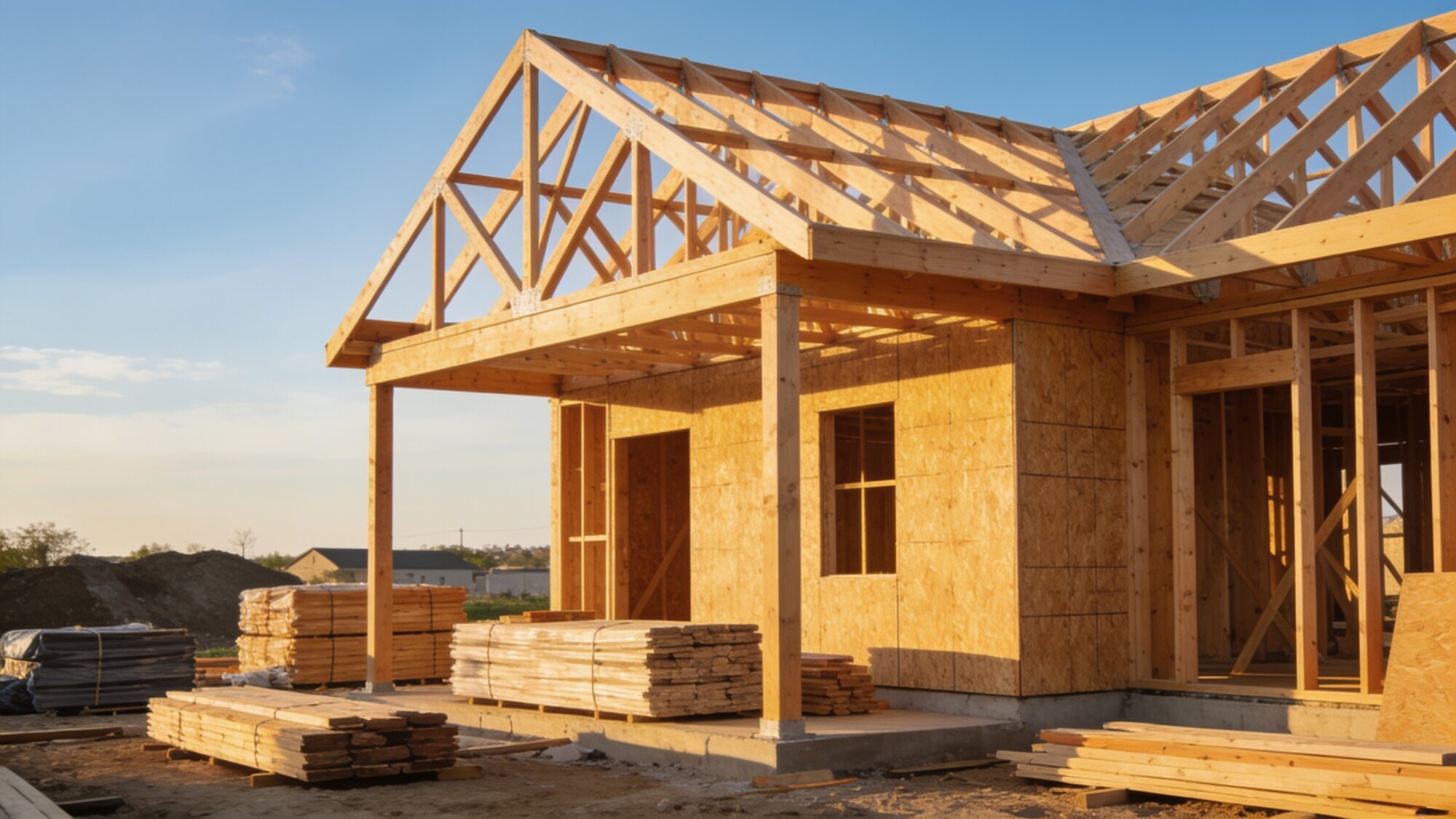 Concept rendering – illustrative, not a completed project.
What did SB 543 change about ADU impact fees in California?
Start with the rule itself, because everything else hangs on it. Under SB 543, effective January 1, 2026, a local agency may not charge a development impact fee on an ADU of 750 square feet or less. A development impact fee is the charge a city or county puts on new construction to help pay for public services. If your ADU is 500 square feet or less, it is also exempt from school fees.
For the state’s own word on ADU law, go to the California Department of Housing and Community Development ADU page. Read it. A builder who has not read it should not be quoting you fees.
SB 543 carries one more rule that gets less attention. Agencies must now determine whether your ADU application is complete within 15 business days. Read that carefully. It is a deadline for the agency to tell you whether your submittal is complete. It is not a deadline to approve your project, and nobody honest will tell you otherwise. It still helps you, because it puts a clock on the agency, and a clock beats silence.
Why does 750 square feet matter more than any other number on your plans?
Because it is a line, and lines create cliffs. At 750 square feet or less, the agency may not charge you development impact fees. Go over, and the whole unit gets pulled into the fee column, not just the extra square feet. A 760 square foot ADU can be treated very differently from a 750 square foot one, and the ten extra feet buy you almost nothing you can live in.
How big is that cliff in dollars? We will not guess. Impact fee schedules differ from one city and county to the next, and a guessed number is the worst kind, because you would budget around it. Your real number comes from your parcel, and the fee read is part of our free ADU estimate.
What is SB 1117, and is it law yet?
Governor Newsom signed SB 1117 on September 29, 2026, after it passed the Senate 37-0. The signing is covered in the Governor’s announcement. Here is how the bill’s sponsor describes what it does: for the first two ADUs on a property, impact fees would apply only to the square footage above 750, instead of to the whole unit once it crosses 750.
If that holds up, the cliff turns into a slope. An 800 square foot ADU would be charged on the 50 square feet above the line, not on all 800.
Now the part where we stay honest with you. We are working from the sponsor’s description, and the final text is pending. We do not have a confirmed effective date, and we cannot say how your city will apply it. So we will not promise you a savings figure on a bill whose final text we have not seen. Until it is out, design around the rule you can read today.
How do the fee rules line up on a timeline?
Here are the dates in one place. Read the right-hand column first, because that is the one that touches your wallet.
| When | Law | What it does | What it means for you |
|---|---|---|---|
| January 1, 2025 | AB 2533 | Creates a path to legalize unpermitted ADUs built before January 1, 2020 | An old unpermitted unit may have a route to legal status |
| January 1, 2026 | SB 543 | No development impact fees on ADUs of 750 sq ft or less. ADUs of 500 sq ft or less exempt from school fees. Completeness decision on your application within 15 business days | 750 is the impact-fee line and 500 is the school-fee line |
| September 29, 2026 | SB 1117 (signed, final text pending) | Per its sponsor: for the first two ADUs on a property, impact fees apply only to the square footage above 750 | Going over 750 may cost less than it used to. Confirm once the final text is out |
| Today, any city | Local fee schedules | Plan check and permit fees vary by jurisdiction, as do utility connection charges where they apply | Smaller is not free. Our free estimate reads the fees for your parcel |
What fees can still land on a 750 square foot ADU?
A 750 square foot ADU is not a free ADU. Development impact fees fall away at or below the line. The rest of the bill does not. Expect plan check and permit fees, school fees on anything above 500 square feet, and utility connection charges where they apply.
Every one of those varies by jurisdiction. Sacramento and the cities and county around it each run their own fee schedule, and the numbers are theirs to set. We are not printing dollar figures here, because any figure we printed would be wrong for most of the people reading it.
Notice how the two lines work together. A 500 square foot unit clears both the impact-fee line and the school-fee line. A 745 square foot unit clears the first and not the second. Smaller saves a fee, but only you know whether smaller fits the person moving in.
So here is what we do instead of guessing. During the free on-site estimate, we check the exact fees for your specific parcel, and that fee read comes with your written estimate. You see the whole picture before you sign anything.
Is 740 to 750 square feet the right size for your ADU?
For many families, yes. It is one of the smartest sizes in California right now. You sit under the impact-fee line with nearly all the floor area the line allows. It is also the size least exposed to whatever SB 1117’s final text turns out to say, because it sits under a rule that is already in force.
What fits in there? Usually a one-bedroom with room to breathe, or a tight two-bedroom, depending on how the plan is drawn. Whether that suits you depends on who is moving in: a parent who needs to be close, or a tenant who pays you rent. Shape the plan around that person first, and use our design-your-ADU page to start sketching.
Now the money, in planning ranges you should treat as ballparks, not quotes. A detached ADU runs about $250-400 per square foot. Garage conversions and JADUs come in lower, at roughly $150-260 and $100-200. A 600 square foot detached unit lands around $150,000-$240,000 all-in. By the same multiplication, a 750 square foot detached unit is roughly $187,500-$300,000.
Rent runs on ballparks too, and you should check them against live listings before you trust them. A 400 square foot unit rents for roughly $1,400-$1,900 a month. A 600 square foot unit runs about $1,700-$2,300, and an 800 square foot unit about $2,000-$2,700.
Here is the arithmetic that rarely makes the brochure. Going from 600 to 800 square feet adds roughly $300-400 a month in rent on those ranges. It also adds 200 square feet of construction at $250-400 per square foot, which is $50,000-$80,000. Do the division yourself: the extra rent alone takes more than ten years to pay that back. That is simple multiplication on planning ranges, not a forecast. Rents move.
So 740 to 750 is smart, not magic. If your family needs more room, build the room. Do not squeeze a plan to dodge a fee line when your mother needs a second bedroom. Bring the fee read and the floor plan to the same table, and decide with both in front of you.
Is the CalHFA $40,000 ADU grant still available?
No. Read this section twice if a blog or a salesperson has told you otherwise. The CalHFA $40,000 ADU grant has been closed since December 2023. It was fully allocated, and no new round has been announced as of this writing. The CalHFA ADU page is the source, and it is worth a visit before you spend a minute on anyone’s pitch.
Plenty of blogs still advertise that grant as if it were open. CalHFA itself warns that anyone promising to get you the grant is a red flag. We agree, and we hold ourselves to it: if any builder, us included, brings up that grant as a reason to sign, walk.
A builder cannot get you money from a program that has no money in it. A pitch built on a closed program also tells you what the rest of the sales process will look like. What is real is a firm written number and a financing plan that fits your budget. Start with our ADU cost and financing page for the actual options.
What if you already have an unpermitted ADU or converted garage?
AB 2533, law since January 1, 2025, creates a path to legalize unpermitted ADUs built before January 1, 2020. If you have a back unit or a garage conversion from those years that never saw a permit, you may have a route to make it legal. A legal unit is a very different asset from one that exists only on the honor system.
We cannot tell you from a distance whether yours qualifies. That takes eyes on the property. Mention it when you book your estimate.
What should you do before you talk to any ADU builder?
Run this list. It takes an evening, and it will help you screen out a bad pitch before it reaches your kitchen table.
- Decide who the ADU is for before you pick a size. The person moving in sets the floor plan, and the floor plan decides whether you can stay under 750.
- Ask every builder one question. “At 750 square feet or under, which fees still apply on my parcel?” Get the answer in writing. Ours is part of the free estimate.
- Ask what the builder is assuming about SB 1117. “The text is pending” is a fine answer. A savings figure with no source is not.
- Ask any builder who mentions the CalHFA $40,000 grant to show you the current program page. It is closed. If they cannot show you otherwise, walk.
- Check the lot itself. Zoning and setbacks set the real ceiling on size, and our ADU permits and zoning page is the place to start.
- Mention any older unpermitted unit on the property, so AB 2533 can be checked.
- Get the number on paper, from a site visit, before you pay for anything.
Fees are one line on a very long page. The bigger risk is building from a blog post that was already out of date the day you read it, and this one will be out of date eventually too, so check the date and check the sources. When you want a number that comes from your lot and not from a blog, call (916) 432-0333 or use the form below. The site visit is free, and the estimate is written.
Your ADU Fee Questions, Answered Straight
Are ADUs of 750 square feet or less really exempt from impact fees in California?
Under SB 543, effective January 1, 2026, local agencies may not charge development impact fees on ADUs of 750 square feet or less. That covers impact fees only. Other charges, such as plan check and permit fees, still exist and vary by jurisdiction. We check the exact fees for your parcel as part of the free estimate.
Is SB 1117 law, and does it change the 750 square foot rule?
Governor Newsom signed SB 1117 on September 29, 2026, after a 37-0 Senate vote. Per its sponsor’s description, for the first two ADUs on a property, impact fees would apply only to the square footage above 750 instead of to the whole unit once it crosses 750. The final text is pending, so we are not promising a savings figure yet. The exemption for units at 750 or under comes from SB 543.
Is the CalHFA $40,000 ADU grant still open?
No. It has been closed since December 2023, fully allocated, with no new round announced. CalHFA itself warns that anyone promising to get you the grant is a red flag. If a builder dangles that grant today, walk.
Do school fees apply to my ADU?
Under SB 543, ADUs of 500 square feet or less are exempt from school fees. Above 500 square feet, school fees still apply, even on a unit that is 750 square feet or less and exempt from impact fees. The amounts vary by jurisdiction, so we look them up for your parcel.
Can I legalize an ADU that was built without permits?
AB 2533, law since January 1, 2025, creates a path to legalize unpermitted ADUs built before January 1, 2020. Whether your unit qualifies takes a look at the property, so mention it when you book your free on-site estimate.
Get real numbers for your lot
Ballparks are for reading. Your number comes from your lot – and the site visit is free.
Free ADU Estimate
Tell us about your lot and we will call you with real numbers.